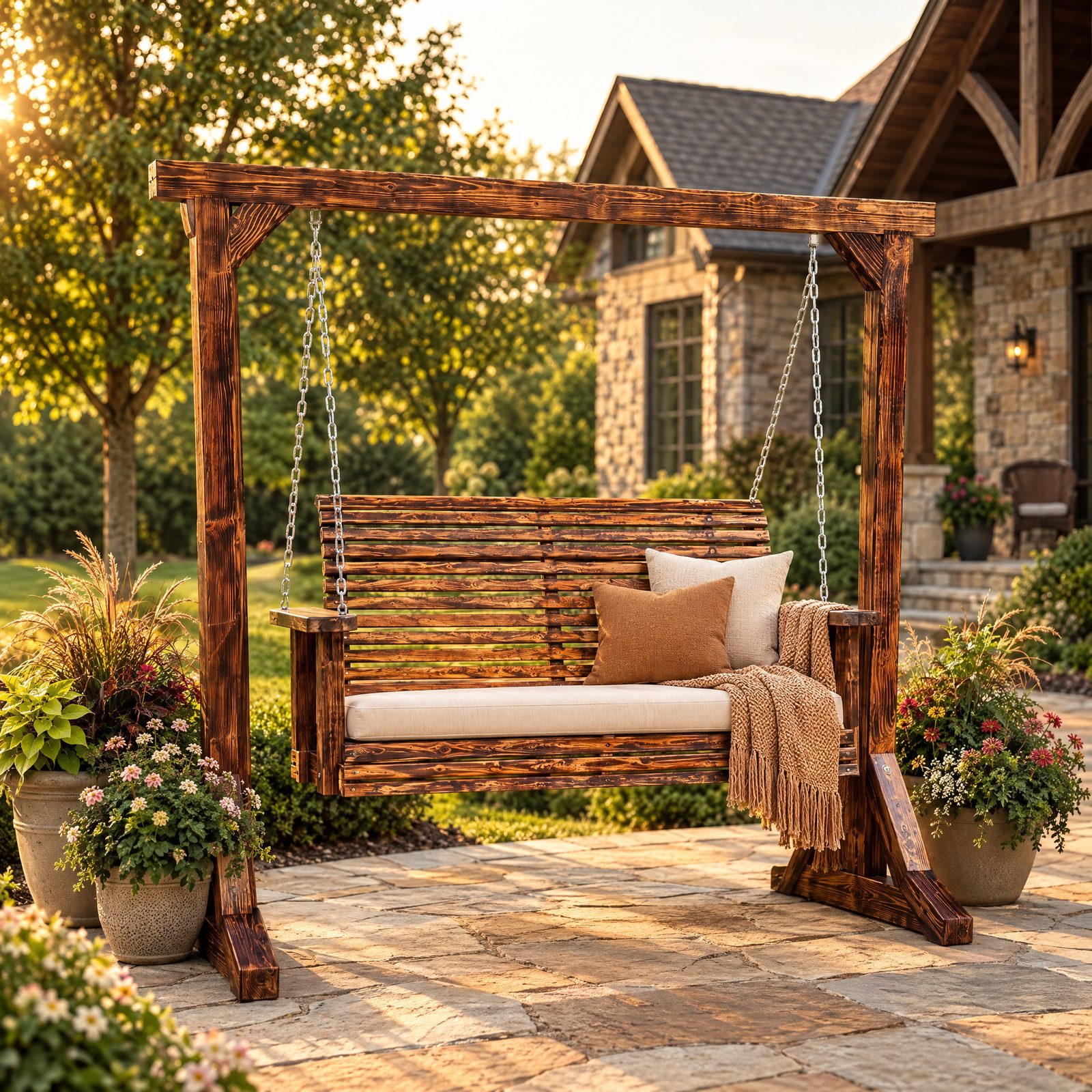
How to Make Your Porch Swing Last in Kansas City Weather
Kansas City doesn't go easy on outdoor furniture. Between the summer heat, the humidity, the sudden storms, and the freeze-thaw cycles of winter, a porch swing takes a beating year-round. The good news is that with the right finish and a simple maintenance routine, a quality custom porch swing can hold up for well over a decade.
Here's how to keep yours looking and feeling great through every season.
Kansas City Weather Challenges
To protect your swing, it helps to understand exactly what it's up against.
Heat and UV
Kansas City summers regularly push into the 90s and beyond. Direct sunlight breaks down wood finishes over time, causing fading, drying, and eventually cracking. UV damage is slow but relentless—it's the reason unprotected wood turns gray and brittle.
Humidity and Rain
Summers are humid, and storms roll through fast. Wood absorbs moisture, and when that moisture sits in joints and end grain, it creates the conditions for rot, mildew, and warping. A swing that stays wet for extended periods will deteriorate much faster than one that dries quickly.
Freeze-Thaw Cycles
Winter in Kansas City means temperatures that swing above and below freezing repeatedly. Water that seeps into wood grain expands when it freezes, then contracts when it thaws. Over many cycles, this opens up cracks and loosens joints. It's one of the most damaging forces outdoor wood faces in our climate.
Wind and Storms
Spring and summer storms bring high winds, hail, and driving rain. A swing that's exposed and unsecured can take physical damage, and wind-driven rain reaches surfaces that normal rainfall wouldn't touch.
Choosing the Right Finish
The finish on your swing is its first line of defense. A good exterior finish does three things: blocks UV rays, repels water, and allows the wood to breathe so trapped moisture can escape.
Exterior oil-based stains penetrate the wood and provide UV protection without creating a film that can peel. They need reapplication every 1–2 years but are easy to maintain—just clean the surface and apply a fresh coat.
Spar urethane or marine-grade varnish creates a harder, more protective film. It lasts longer between coats (2–3 years) but requires more prep work when it's time to refinish, since old varnish needs to be sanded before recoating.
Exterior paint offers the most UV protection and completely seals the wood. It lasts the longest but hides the natural grain. If you prefer the look of natural wood, a tinted oil stain or clear spar varnish with UV inhibitors is the better route.
Whatever you choose, make sure the product is rated for exterior use and includes UV protection. Interior finishes will fail within a single season outdoors.
Seasonal Maintenance Schedule
Spring
This is your annual reset. After winter, give your swing a thorough inspection and cleaning.
- Wash the swing with mild soap and water. A soft brush works well for getting into slat gaps.
- Inspect all joints, bolts, and connection points for looseness or damage.
- Check the finish for peeling, fading, or bare spots.
- If the finish is worn, lightly sand and apply a fresh coat before the heat of summer arrives.
Summer
Summer is about minimizing damage from heat and storms.
- If your swing is in direct sun, consider a porch fan or shade solution to reduce UV exposure.
- After heavy rains, wipe down the swing to help it dry faster—especially joints and the underside of the seat.
- Tighten any hardware that has loosened from regular use.
Fall
Fall is prep time for winter.
- Give the swing another cleaning to remove pollen, dirt, and any mildew that developed over summer.
- Apply a light coat of oil or sealant if the finish looks thin. This gives the wood extra protection heading into the wet, cold months.
- Remove cushions and store them indoors or in a dry storage bin.
Winter
If your swing is on a covered porch, it can stay up through winter with minimal risk. If it's exposed, consider taking it down and storing it in a garage or shed. A breathable cover (not plastic, which traps moisture) is a good middle ground if storage isn't an option.
- Brush off snow and ice promptly to prevent prolonged moisture contact.
- Check chains and hardware for rust after ice or salt exposure.
- Avoid sitting on a frozen swing—cold wood is more brittle and can crack under sudden stress.
Hardware and Chain Care
The wood gets most of the attention, but your chains, bolts, and hanging hardware need care too. Rust is the main enemy. Once a chain link or screw eye starts corroding, it weakens the entire connection.
Use zinc-plated or stainless steel hardware from the start. These resist rust far better than bare steel. Even with coated hardware, check for rust spots each spring. If you see surface rust, clean it with a wire brush and apply a rust-inhibiting spray.
Lubricate chain links and connection points with a silicone-based lubricant once or twice a year. This reduces squeaking and prevents metal-on-metal wear that accelerates corrosion.
If a chain, bolt, or screw eye shows significant rust or wear, replace it immediately. Hardware is inexpensive compared to the cost of a swing falling due to a failed connection.
Cushion and Fabric Care
Outdoor cushions take almost as much abuse as the swing itself. Sun fades fabric, rain soaks foam, and mildew thrives in damp, shaded spots.
Invest in cushions with Sunbrella or equivalent outdoor-rated fabric. These resist fading, repel water, and stand up to mildew far better than indoor fabrics. They cost more upfront but last several seasons longer.
Store cushions upright or on edge when not in use so water drains rather than pooling. Bring them inside during extended rain or when the swing won't be used for weeks at a time. Wash covers periodically with mild soap—most outdoor fabric covers are removable and machine-washable.
Signs It's Time for Refinishing
Even with good maintenance, every finish wears down eventually. Here's how to tell when it's time:
- Water stops beading on the surface and instead soaks in—the sealant has worn through
- The color has faded noticeably or turned gray in spots
- The surface feels rough or splintery where it used to be smooth
- You see small cracks forming along the grain, especially on flat surfaces exposed to sun
- Mildew is growing in areas that stay damp, even after cleaning
Refinishing is straightforward: sand the surface lightly to remove the old finish and open the grain, clean off the dust, and apply your chosen stain, oil, or varnish. Two thin coats are better than one thick coat. Let each coat dry fully before applying the next.
Not sure what works for your space? Send us your measurements and we'll help you figure out what fits.
How Good Woodin Co Builds for Weather
We build every porch swing with Kansas City weather in mind. That means selecting wood species that naturally resist moisture and insects, applying exterior-grade finishes designed for our climate, and using stainless steel or coated hardware throughout.
Joints are reinforced with screws and waterproof glue—not just staples or brad nails. Slats are spaced to allow airflow and drainage so water doesn't sit on the surface. End grain is sealed to block moisture absorption at the most vulnerable points.
The result is a swing that's ready for what Kansas City throws at it from day one. With basic seasonal maintenance, our swings are built to last 15 years and beyond. See our southern-style porch swing project for an example of how we build for durability.
Related Projects
Want a porch swing built to handle Kansas City weather?
Contact Good Woodin Co for pricing, build details, and pickup information in Lee's Summit.