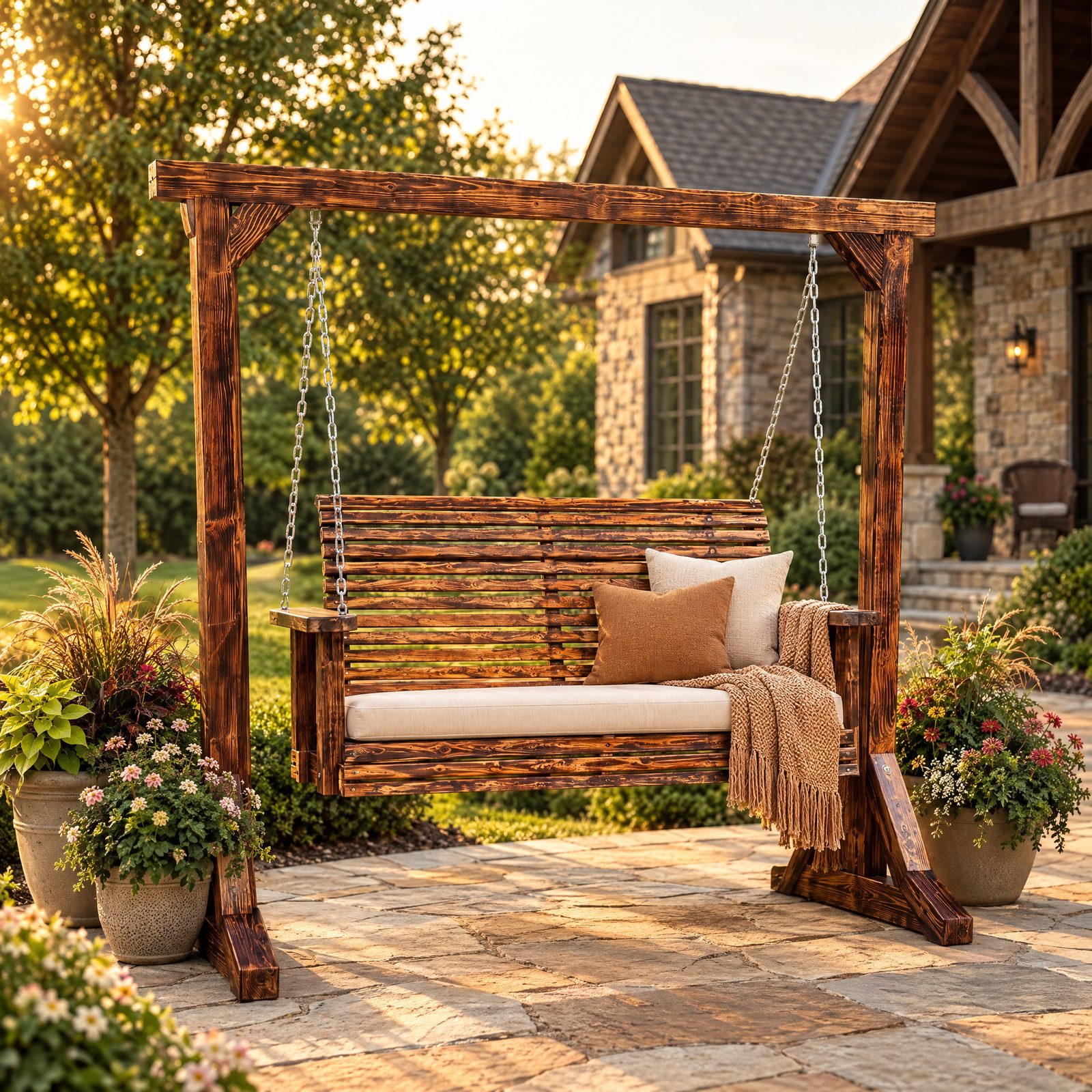
Porch Swing Buying Guide: What to Know Before You Buy
A porch swing sounds simple enough. Pick one out, hang it up, and start swinging. But once you start shopping, the options multiply fast—size, material, hardware, cushions, price. Without a plan, it's easy to end up with a swing that doesn't fit your space, your porch structure, or the way you actually want to use it.
This guide walks through everything you should think about before buying a porch swing, whether you're shopping online, visiting a local builder, or considering a custom piece.
Why a Porch Swing?
There's a reason custom porch swings have been a staple of American homes for over a century. They turn a plain porch into a destination. Instead of walking past your front door, you linger. You sit. You watch the neighborhood go by. That shift—from passing through to staying put—is what makes a porch swing more than furniture.
Beyond the feeling, there are practical benefits. A well-built porch swing adds curb appeal and can increase your home's perceived value. It creates usable outdoor seating without taking up floor space the way a table and chairs would. And unlike a bench, the gentle rocking motion makes it genuinely relaxing.
Whether you're looking for a quiet morning coffee spot, a place to read in the evening, or somewhere the whole family gathers on weekends, a porch swing delivers on all of it.
Size Matters
The single most common mistake people make is buying a swing that's the wrong size for their space. A swing that's too wide will crowd the porch and limit movement. A swing that's too small will feel cramped for two adults.
Most porch swings fall into two categories: 4 feet and 6 feet. A 4-foot swing works well on smaller porches and comfortably seats two people sitting upright. A 6-foot swing gives you room to stretch out, nap, or fit a third person. It needs a wider porch, but the comfort difference is significant.
Before you buy, measure your porch width, depth, and ceiling height. You need at least 14–16 inches of clearance behind the swing and 3–4 feet in front for leg room and swinging motion. For a deeper look at sizing, check out our 4 ft vs 6 ft swing guide.
Materials and Durability
The material your swing is made from determines how it looks, how it holds up, and how much maintenance it needs over time. Here in the Kansas City area, your swing will face heat, humidity, rain, and freezing winters—so material choice is not cosmetic. It's structural.
Quality outdoor lumber that resists rot, moisture, and insects is essential for any swing that lives outside year-round. The right wood weathers beautifully and holds up through Kansas City's toughest seasons when properly finished. Composite and synthetic materials require less maintenance but often lack the warmth and character of real wood.
Whichever material you choose, look for thick lumber, smooth joints, and a solid finish. Thin slats and rough construction are red flags that a swing won't last more than a few seasons. A well-built wooden swing, properly finished, can last 15–20 years or more. Take a look at our southern-style porch swing build for an example of what quality craftsmanship looks like.
Hanging Hardware and Structure
This is the part most people overlook, and it's arguably the most important. Your swing is only as safe as the structure it hangs from.
Porch swings need to attach to structural ceiling joists or beams—not decorative trim, not drywall, not thin porch boards. If your joists run parallel to the swing, you may need a mounting beam or header board that spans multiple joists to distribute the weight properly.
Use heavy-duty screw eyes or hanging bolts rated for at least 500 pounds per hook. Chains should be zinc-plated or stainless steel to resist rust. Springs are optional but add a smoother, bouncier swing motion that many people prefer over chains alone.
If you're not sure whether your porch can support a swing, it's worth having someone take a look before you commit. The cost of reinforcing a joist is far less than the cost of a ceiling repair after a failure.
Comfort Features
Once you've got the basics covered, comfort is what separates a swing you sit on occasionally from one you use every day.
Seat depth matters more than most people realize. A seat that's 20–24 inches deep allows you to sit back fully without your legs dangling uncomfortably. Shallower seats feel fine for a few minutes but get tiring fast.
Back angle is another factor. A slight recline—around 10 to 15 degrees—feels natural and relaxed. A perfectly vertical back feels stiff. Some swings include contoured slats or a curved back that follows the spine more naturally.
Armrests, cup holders, and cushion ties are nice extras. But they don't rescue a swing that's uncomfortable at its core. Focus on seat width, depth, and back angle first, then add accessories.
Budget Considerations
Porch swings range from under $150 for a basic big-box store model to $1,500 or more for a handcrafted, custom-built piece. The difference usually comes down to material quality, joinery, finish, and how long the swing will actually last.
A cheap swing might look fine in photos, but thin wood, stapled joints, and poor-quality chains mean it could be sagging or rusting within two years. A quality swing built from solid lumber with proper hardware will outlast it by a decade or more.
Think about cost per year of use rather than just the sticker price. A $300 swing that lasts three years costs you $100 a year. A $900 swing that lasts fifteen years costs $60 a year—and it looks and feels better the entire time.
Don't forget to budget for hardware, cushions, and any structural reinforcement your porch might need. These can add $50–$200 to the total project cost.
Not sure what works for your space? Send us your measurements and we'll help you figure out what fits.
Where to Buy
You've got options: big-box retailers, online marketplaces, local woodworkers, and custom builders. Each has trade-offs.
Big-box stores offer convenience and low prices, but the quality is often mass-produced and generic. Online marketplaces can be hit or miss—reviews help, but you can't feel the wood or test the swing before it arrives. Shipping a large, heavy swing also carries risk of damage.
Local builders and custom shops give you the most control. You can choose the wood species, the dimensions, the finish, and even add personal details. You can see and touch the materials before the build starts, and you're supporting someone in your community.
Good Woodin Co builds custom porch swings right here in Lee's Summit, Missouri. Every swing is made to order, built from solid wood, and finished to handle Midwest weather. Pickup is available directly from our shop, and we occasionally offer small local delivery. No generic, one-size-fits-all builds—just quality craftsmanship tailored to your space.
Final Checklist
Before you buy, make sure you can check off each of these:
- Measurements: You know the width, depth, and ceiling height of your porch or hanging area
- Size: You've chosen between a 4 ft or 6 ft swing based on your space and use
- Structure: Your ceiling joists or beams can support the weight of the swing plus occupants
- Material: You've picked a wood species or material that fits your climate and maintenance preference
- Hardware: You have (or plan to get) heavy-duty hanging bolts, chains, and springs rated for the load
- Comfort: The seat depth, width, and back angle feel right for how you plan to use it
- Budget: You've accounted for the swing, hardware, cushions, and any structural work
- Source: You know where you're buying from and trust the quality
If you can check every box, you're ready to buy with confidence.
Related Projects
Looking for a custom porch swing built to fit your space?
Contact Good Woodin Co for pricing, build details, and pickup information in Lee's Summit.