What Size Pergola Do I Need? A Complete Pergola Size Guide
A pergola can transform a flat, open backyard into a space that actually feels like an outdoor room. But the single biggest factor in whether your pergola looks right, functions well, and feels worth the investment is getting the size right.
Too small and it feels like an afterthought. Too large and it overwhelms the yard. Here is how to figure out exactly what size pergola fits your space, your plans, and your lifestyle.
Why Size Matters for Pergolas
Unlike a piece of furniture you can return, a pergola is a semi-permanent structure. Once the posts are set and the beams are up, you are living with that footprint for years. The right size means:
- Your furniture fits comfortably underneath with room to move
- The structure looks proportional to your home and yard
- You have enough shade coverage for the activities you actually do out there
- You are not wasting money on unused square footage or wishing you had gone bigger
Measuring Your Space
Before you pick a size, grab a tape measure and map out the area where the pergola will go. Here is what to measure:
- Total available footprint — length and width of the area, including any patio or deck
- Distance from the house — especially if you are considering an attached pergola
- Setback from property lines — most cities require a minimum distance from fences and lot lines
- Overhead clearance — watch for tree branches, power lines, eaves, and gutters
- Access paths — leave room for walkways around and through the pergola area
Write these numbers down. They will narrow your options faster than any design magazine.
Common Pergola Sizes and What They Fit
8x8 Pergola
Best for small patios, intimate seating areas, or covering a single focal point like a bistro table or a swing. This is the most compact option and works well in smaller backyards or as an accent structure. Fits two chairs and a small table comfortably.
10x10 Pergola
A popular starting size. This gives you enough room for a four-person dining set or a small lounge area with two chairs and a loveseat. It is a solid choice for homeowners who want defined outdoor space without taking over the whole yard.
10x14 Pergola
The rectangular shape opens up more layout options. You can fit a full dining table for six, a lounge set with a coffee table, or a combination of seating and a grill station nearby. This size starts to feel like a real outdoor room.
12x16 Pergola
This is where you get serious entertaining space. Room for a large dining set, multiple seating zones, or even a dining area on one end and a lounge on the other. If you host gatherings regularly, this size earns its keep fast.
Custom Sizes
Not every yard fits neatly into standard dimensions. Maybe you have a 9x13 patio pad, an L-shaped deck, or a slope that changes everything. Custom pergolas let you build exactly what the space needs instead of forcing a standard size into an awkward footprint.
What Activities Need What Size
Think about what you will actually do under the pergola, then size accordingly.
Outdoor Dining
A table for four needs at least an 8x10 footprint. A table for six to eight needs 10x14 or larger. Always leave 3 feet around the table so chairs can pull out without hitting posts.
Lounging and Relaxing
A couple of Adirondack chairs and a side table fit under an 8x8. A full sectional or daybed setup needs at least 10x12. If you want a hanging daybed or swing under the pergola, factor in the swing arc and clearance.
Hanging a Swing
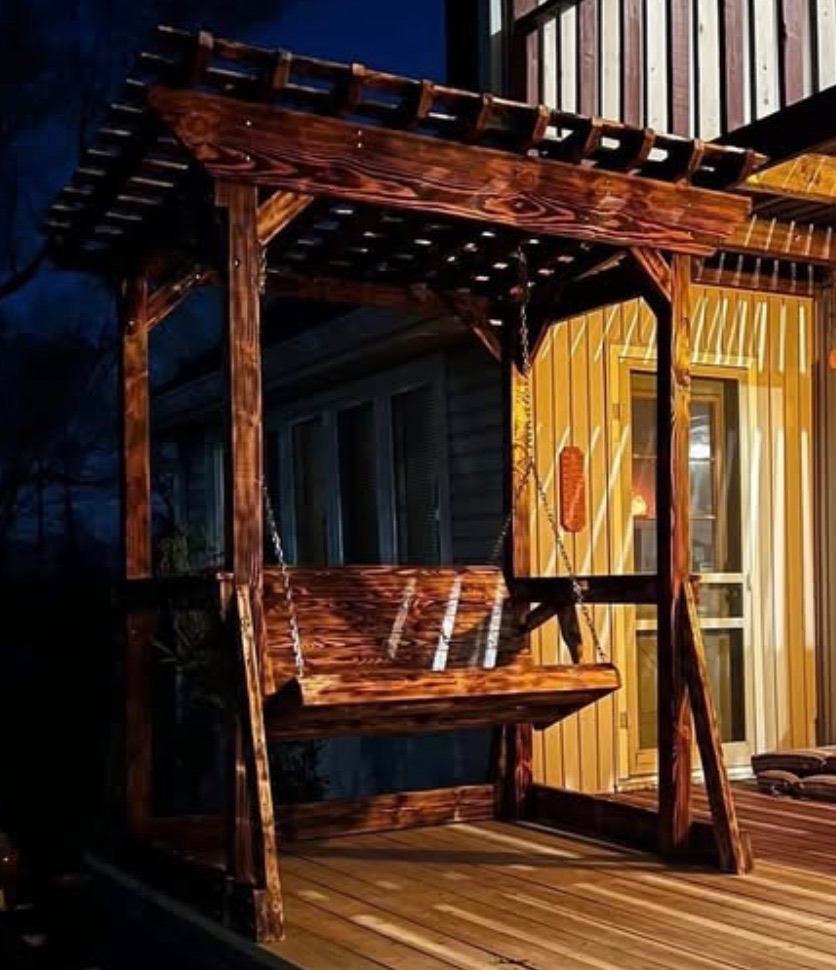
A custom porch swing under a pergola is one of the best combinations out there. See our custom pergola project for an example of how this pairing works. You need at least 4 feet of clearance behind and in front of the swing for motion. A 4-foot swing fits well under a 10-foot-wide pergola. A 6-foot swing needs at least 12 feet of width.
Hot Tub Cover
Most hot tubs are 7x7 or 8x8. Plan for a pergola that is at least 2–3 feet larger on each side to allow access, ventilation, and a place to set towels. A 12x12 is a common choice for hot tub pergolas.
Height Considerations
Pergola height affects both the look and the function of the structure.
- 8 feet is the minimum for comfortable headroom but can feel slightly low on larger pergolas
- 9–10 feet is the sweet spot for most residential pergolas — open and airy without feeling disconnected
- 11–12 feet works for large structures or when attaching to a two-story home
Taller pergolas let more light in from the sides, while shorter ones create a cozier, more enclosed feel. Think about whether you want shade, ambiance, or both.
Attached vs Freestanding
Attached Pergola
Mounts directly to the house, usually over a patio door or deck. This saves space and creates a seamless transition from indoors to outdoors. Best when the back of your house has a straight wall and an existing patio surface.
Freestanding Pergola
Sits on its own with four posts, placed anywhere in the yard. More flexible for placement and easier to work around underground utilities. Best when you want the pergola away from the house or over a separate seating area in the yard.
Freestanding pergolas can be slightly larger since they are not limited by roof lines or gutter placement.
Working with an Irregular Space
Not every backyard is a flat rectangle. If you are dealing with slopes, curved patios, offset fences, or existing landscaping, here are a few things to keep in mind:
- Slopes — posts can be cut to different heights to keep the top level, but this adds complexity and cost
- Curved patios — a square or rectangular pergola can still sit on a curved pad; just make sure the posts land on solid ground
- Trees and landscaping — factor in root systems and future growth; you do not want branches growing through your rafters in three years
- Narrow lots — a long, narrow pergola (like 8x16) can define a walkway or side-yard seating area
The key is to work with the space you have instead of fighting it.
Permits and Codes
Many cities and counties require a building permit for pergolas, especially structures over a certain height or square footage. In the Kansas City metro area, requirements vary by municipality. Before you finalize a size, it is worth checking with your local building department about:
- Setback requirements from property lines
- Maximum height restrictions
- Whether a permit is required for your planned size
- HOA rules if applicable
This is not the most exciting step, but it can save you from expensive headaches later. Have questions about your specific setup? Reach out to Good Woodin Co and we'll help you figure out what works.
How Good Woodin Co Approaches Custom Sizing
We do not push standard sizes. Every pergola we build starts with a conversation about your space, your plans, and how you want to use the area. We ask about furniture, traffic flow, sun exposure, and what you want the space to feel like.
From there, we recommend a size that makes sense — not the biggest option, not the cheapest, but the one that fits your yard and your life.
All of our pergolas are built custom and available for pickup in Lee's Summit, MO. We occasionally offer small local deliveries as well. No cookie-cutter kits. No one-size-fits-all.
Related Projects
Ready to figure out the right pergola size for your yard?
Contact Good Woodin Co for a custom quote and honest sizing advice.